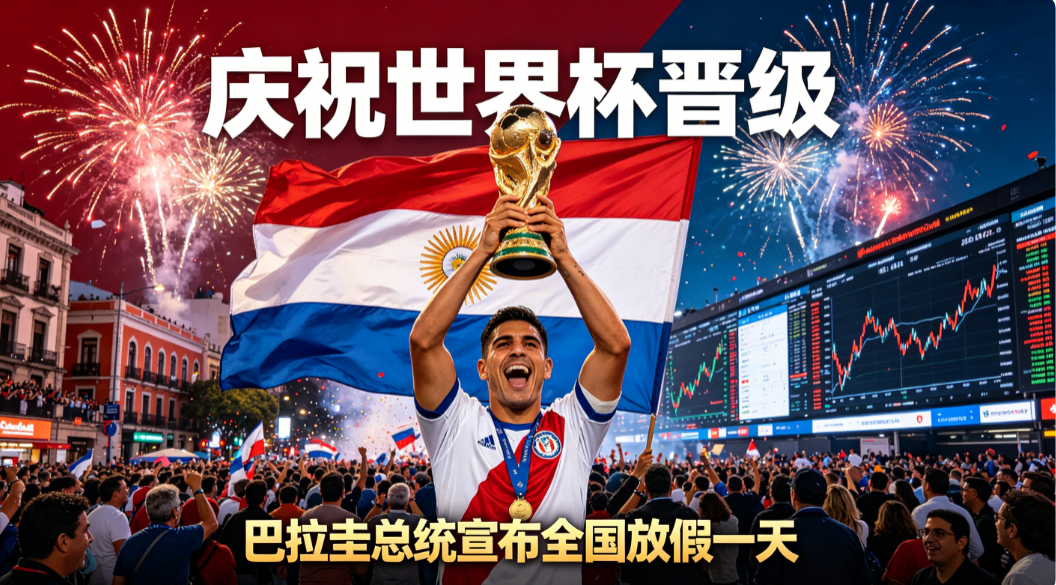
Paraguay Declares National Holiday After Historic World Cup Upset
Keywords: Paraguay, World Cup, national holiday, Miguel Peña, Germany, football, public sentiment, South America, Ecuador, sports diplomacy
Introduction
In a striking blend of sport and national identity, Paraguay has declared a one-day national holiday to celebrate its national team’s dramatic advance to the Round of 16 at the FIFA World Cup. According to Singapore’s Channel News Asia (CNA), President Santiago Peña announced that June 30 would be a public holiday across the country, following Paraguay’s unexpected victory over Germany in a high-stakes knockout clash. The decision underscores the profound social and political significance that football can hold in Latin America, where major sporting achievements often transcend the boundaries of the pitch and become moments of collective national pride.
The announcement also places Paraguay alongside another South American nation, Ecuador, which recently took a similar step after its own team progressed in the tournament. Together, these decisions reveal more than just enthusiasm for football: they reflect how sports success can unite citizens, boost morale, and even become a tool for national celebration and identity-building.
A Victory That Captured the Nation
Paraguay’s 1–1 draw with Germany in regular time, followed by a successful penalty shootout, has been widely described as one of the tournament’s major surprises. For Paraguay, the result carried particular historical weight. The team had waited 16 years to return to the World Cup Round of 16, making the breakthrough not only a sporting achievement but also a symbolic milestone for a nation eager to reclaim its place among football’s competitive forces.
The emotional impact of such a victory should not be underestimated. In many countries, football is more than a game; it is a shared language through which people express pride, hope, and belonging. A win against a global powerhouse like Germany is especially meaningful because it challenges expectations and elevates the perceived status of the national team. For Paraguayans, the result likely offered a rare moment of collective joy, one that resonated far beyond stadiums and sports pages.
President Peña captured that mood in a social media post declaring, “Today, the whole nation is celebrating,” while sharing an image of himself signing the decree for the holiday. His message was both symbolic and political: by formalizing the celebration, the government recognized football as part of the nation’s civic life.
Why a National Holiday Matters
Declaring a national holiday for a sporting victory is not merely a ceremonial act. It carries economic, social, and political implications. On one hand, it grants citizens the opportunity to celebrate together, reinforcing communal identity and allowing the emotional energy generated by the victory to be collectively experienced. On the other hand, it signals that the state views the moment as historically important enough to interrupt the ordinary rhythm of work and commerce.
Such decisions are relatively uncommon, but in football-crazy countries they are not without precedent. A holiday can serve as an official acknowledgment that the team’s success has become part of the national narrative. It can also help channel public excitement in a positive direction, particularly after a major upset that may otherwise spill into spontaneous celebrations in streets, plazas, and public squares.
From a governance perspective, the move also demonstrates responsiveness to public sentiment. Governments in Latin America often understand that football has a unique capacity to shape public mood. In times when political dissatisfaction, inflationary pressure, or social fragmentation dominate the agenda, a major sports victory can offer a rare and welcome source of unity. By responding quickly and visibly, leaders can align themselves with the public’s emotional moment and reinforce a sense of shared national purpose.
Paraguay and the Regional Football Tradition
Paraguay’s decision follows a broader regional pattern. CNA reported that Paraguay has become the second South American country to declare a holiday after a World Cup upset involving Germany. Earlier, Ecuador’s President Daniel Noboa announced a national holiday on June 26 to mark Ecuador’s progression to the knockout stage. The parallel response from two neighboring football cultures reflects the deep place the sport occupies in the political and social life of the region.
South American football has long been associated with passion, identity, and international prestige. Success on the world stage is often seen not just as athletic accomplishment but as validation of a nation’s resilience, talent, and international standing. For countries that do not always command global attention in economic or geopolitical terms, football can provide a powerful alternative source of recognition.
This is particularly true when victories come against traditional powerhouses. Germany, with its storied football legacy, represents the kind of opponent against whom an upset carries extraordinary symbolic value. For Paraguay and Ecuador, such results are more than match outcomes; they are moments that challenge assumptions and elevate national confidence.
The Political Language of Celebration
President Peña’s decision also illustrates how sports and politics can intersect in modern governance. Public celebration following a football victory may appear purely emotional, but it also has a strategic dimension. By framing the holiday as an expression of national joy, the presidency positions itself as an active participant in the collective experience. The state becomes not just an observer of public sentiment, but a facilitator of it.
This form of political communication is especially effective in societies where football is deeply woven into everyday life. In such contexts, a leader’s response to a sporting milestone can influence public perception significantly. A swift declaration of a holiday suggests empathy, cultural awareness, and an understanding of what the moment means to ordinary citizens.
At the same time, there is a practical side to such decisions. National holidays can affect productivity, transportation, retail, and public services. Yet governments may judge that the social benefits outweigh the temporary economic disruption. When a moment of triumph is powerful enough to command national attention, the symbolic gains can be considered worth the cost.
Football as a Force for National Cohesion
The Paraguayan case is a reminder of football’s extraordinary capacity to create cohesion. In countries with diverse populations and varying political views, sports can provide a rare sense of unanimity. For a day, the usual divisions of class, region, and ideology can fade behind a common emotional cause. Supporters who may disagree on nearly everything else can still unite behind a shared red, white, and blue jersey.
That cohesion matters. National identity is not built solely through institutions or historical memory; it is also shaped by lived experiences that people remember together. A dramatic penalty shootout, a famous upset, and the decision to declare a holiday all become part of that shared memory. Future generations may recall not only the match itself, but where they were when the country stopped to celebrate.
This is one reason football retains such political and cultural power. The sport compresses drama, uncertainty, and emotion into a format that is immediately understandable and widely accessible. In a globalized era often characterized by fragmentation and information overload, football remains one of the few events capable of commanding near-total national attention.
Looking Beyond the Celebration
While the holiday captures the public imagination, the deeper challenge for Paraguay will be sustaining momentum after the celebrations end. A single upset victory, however historic, does not by itself transform a football program. The real task is to convert this moment into lasting confidence, institutional investment, and stronger performance on the international stage.
For policymakers, this may mean greater support for youth development, coaching infrastructure, and domestic leagues. For the public, the victory can help renew faith in the national team and widen interest in the sport. For the players, it provides validation that their achievement has mattered far beyond the match itself.
In that sense, the holiday is both an ending and a beginning. It marks the culmination of one extraordinary moment, while also opening the door to new expectations. Once a team has shown it can defeat a giant like Germany, the national conversation inevitably shifts: not just to celebration, but to ambition.
Conclusion
Paraguay’s declaration of a national holiday after its World Cup triumph over Germany reflects far more than a reaction to a single football match. It is a statement about national pride, collective emotion, and the enduring power of sport to shape public life. In joining Ecuador in honoring a World Cup breakthrough with an official day off, Paraguay has affirmed a distinctly Latin American understanding of football as a matter of national significance.
The move will be remembered not only for its immediate celebratory impact, but also for what it reveals about the relationship between government and society in moments of shared joy. When a sporting victory can unite a country, inspire its citizens, and even prompt the suspension of normal workday life, it becomes clear that football is never just football. It is history in motion, and for Paraguay, it is a day worthy of national celebration.